You decide this is the week you read again. You stand in front of the shelf, or scroll a list of famous novels, and pick the one that feels most worthwhile. Two weeks later it sits on the nightstand with a bookmark on page 30, and reading still feels like a chore.
The problem is almost never you. It is the book. When you are getting back into reading, the title that impresses other people is rarely the one that pulls you through a page at 10 pm. This guide is about choosing a comeback book on purpose: what makes one work, which categories to start with, and how to judge a book before you commit. No ranked list of titles, because the right book depends on what you enjoy, not on what a list says you should.
What makes a good comeback book
A good comeback book does one job: it keeps you turning pages when your attention would rather wander. After years of feeds that is a high bar, and the books most likely to clear it share a few traits.
- Easy to read. Short sentences, clear scenes, a thread you can follow when you are tired. Difficulty is not the same as quality. Save the dense prose for when reading is a habit again.
- Gripping early. A good comeback book earns your attention in the first few pages, not chapter six. If you are not curious by page 20, that is information, not failure.
- Short. A book you can finish in a week or two gives you what you need most: the feeling of reading a whole book again. Momentum beats ambition here.
- Something you actually want. Not the book you feel you should read. The one you are a little embarrassed to want is often the one that works.
The best book to get back into reading is the one you will not put down, not the one that looks best on your shelf.
Rereading an old favorite counts double. You already know you love it, so there is no risk it disappoints, and the familiar pages let your attention settle without working to follow something new.
Categories to start with
Instead of hunting for the perfect title, start with a category that tends to grip lapsed readers, then find a specific book inside it that appeals to you.
- Thrillers and mysteries. Built to make you turn the page: a strong question on page one and short chapters that each end on a small hook. Hard to put down by design.
- Memoir and personal stories. A real voice telling you what happened. Easy to follow, emotionally pulling, and you can stop at any chapter without losing the thread.
- Young adult fiction. Fast, clear and propulsive, whatever your age. Many adults getting back into reading find YA the easiest on-ramp, and there is no shame in that.
- Short story collections. A whole story in one sitting, perfect when you cannot yet commit to 300 pages. Each finished story is a small win.
- A reread you loved. The book that made you a reader in the first place. Comfort and momentum in one.
- Narrative non-fiction. True stories told like novels, about a crime, an expedition or a life. The pull of a story with the interest of learning something.
Pick one category that sounds appealing tonight, not the one that sounds most impressive. You can change later. Right now the goal is to finish something.
How to pick one in the store or library
Standing in a library or bookshop, you can judge a comeback book in two minutes with a few simple checks. Open it and test it against these criteria.
| Criterion | What to check | Green light |
|---|---|---|
| Length | Page count | Under 350 pages, ideally under 250 |
| Opening | Read the first two pages | You want to keep reading |
| Prose | Read any page in the middle | Clear, easy, not a struggle |
| Pull | Chapter length | Short chapters with natural stopping points |
| Pull | Your own reaction | A little curious, a little excited |
| Honesty | Why you want it | Because it sounds fun, not because you should |
If a book fails the opening or the prose check, put it back. There are more books than you will ever read, and spending your comeback on one that bores you is the fastest way back to not reading. The library is ideal for this: borrow a stack, keep only the ones that grip you.
Pair the book with a tiny habit
The right book gets you started. A tiny daily habit finishes it. A gripping book you open once a week still takes months; the same book read a few pages a night is done before you lose interest.
Keep the habit almost embarrassingly small at first:
- Pick a number you can hit on a bad day. Two pages, or five. Small enough that you never have an excuse to skip.
- Tie it to something you already do. After you brush your teeth, with your morning coffee, the moment you sit on the couch. The existing habit becomes the reminder.
- Keep the book where the habit happens. On the pillow, next to the coffee machine, in your bag.
- Count every day you read as a win. Not pages or chapters. Just the fact that you opened the book.
Our guide on how to build a reading habit goes deeper on tying reading to a cue, and how to read more books in a year shows how a tiny daily count adds up to a shelf of finished books.
The hardest part is usually not the reading, it is reaching for the book instead of the phone. That is where a lock helps.
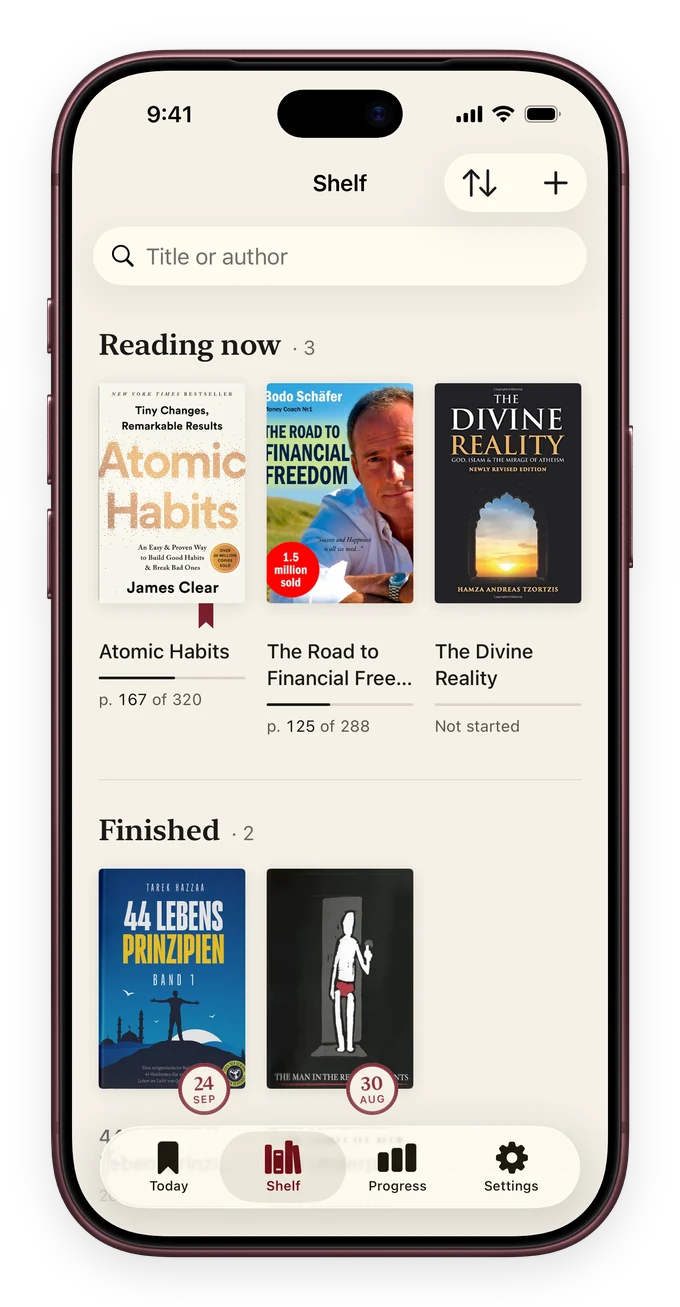
ReadFirst turns the phone from the easy choice into the harder one. You pick the apps to lock with Apple Screen Time, and to open them you read a page of a printed book and take a live photo of it. Your rule decides how many pages give how many minutes, so you can start as gently as one page. A book tracker holds the book you are reading and the ones you finish, and a reading streak with one grace day a month keeps a missed night from undoing your progress. You do not need an app to start, but if the phone keeps winning, a lock that asks for one page first can be the push that gets you back to the book.
When to quit a book
Finishing a book you dislike is a habit many of us learned in school, and it is terrible advice for getting back into reading. Pushing through a book you resent trains you to associate reading with effort and guilt, the exact feeling you are trying to escape.
Give a comeback book about 50 pages. If you still are not pulled in, put it down without guilt and pick another. You are not quitting reading, you are quitting one book, which is how real readers protect their time. A book that bores you is not saving your habit, it is quietly ending it, so trade it for one that grips you. For more on choosing books and the routine around them, see our guide on how to get back into reading.
Frequently asked questions
What are the best books to get back into reading?
The best ones are easy to read, gripping from the first pages, and short enough to finish in a week or two. Rather than a fixed list, start with a category you enjoy, such as thrillers, memoir, young adult fiction or a book you once loved, then pick a specific title that pulls you in.
Should I start with a famous classic?
Usually not. Dense classics ask for focus you may still be rebuilding, and struggling through one is a common way to stall. Start with something easy and fun, get the habit back, and read the classic once reading feels natural again.
Is rereading a book I already love a good idea?
Yes, it is one of the best ways back. You already know you enjoy it, so there is no risk of disappointment, and the familiar pages let your attention settle without the work of following something new.
How long should I give a book before quitting?
About 50 pages. If you are not pulled in by then, put it down and pick another without guilt. Quitting one boring book protects your reading habit instead of ending it, and there are far more good books than you will ever finish.
How many pages a day should I read when starting out?
Pick a number you can hit even on a bad day, such as two or five pages, so you never have an excuse to skip. Small daily reading beats long sessions you rarely repeat, and the pages add up to finished books faster than you expect.