Day 23. You are in bed, the light is already off, and you realize you have not read today. You could let it go. But 23 days is something, so you switch the lamp back on, open the book and read three pages. That small moment is the whole reason a reading streak works: it gives one more page a reason to happen.
Streaks can also go wrong. Miss one day and the number drops to zero, and many people stop right there. Here is how to use a reading streak so it keeps you reading instead of making you anxious.
What is a reading streak?
A reading streak is the count of consecutive days on which you have read. Read today and tomorrow, and your streak is 2. Read every day for a month and it is about 30. Miss a day without any protection, and it usually starts over.
Most reading streaks count a day as soon as you read a small amount, often a single page or a few minutes. The day usually changes at midnight. The streak does not measure how much you read. It measures whether you came back to your book, which is the part that builds a habit.
Why a reading streak helps
A streak helps because it makes an invisible habit visible. Reading every day feels like nothing on any single day; a number that grows makes the progress concrete. It also changes the question you ask yourself in the evening from "do I feel like reading?" to "do I want to keep the streak?", and the second one is easier to answer.
It also connects small days to big results. Ten pages a day for a year is about 12 books of 300 pages. A streak is how you get there, one ordinary evening at a time. See what 10 pages a day adds up to.
Why one page counts
The best reading streaks count one page as a full day. That sounds too easy, but it is the point. On a good day you will read far more than one page anyway. On a bad day, one page is the difference between keeping the habit and breaking it.
A one page minimum protects the identity you are building: someone who reads every day. And starting is the hardest part. Once you have the book open and have read one page, you often read five more. A streak that asks for 30 pages a day breaks on the first hard week. A streak that asks for one page survives.
How to keep a reading streak
Keeping a reading streak gets easier when you build it into the day rather than hoping you will remember. These habits help the most.
- Read at the same time every day. Pick a slot you already have, like after dinner or in bed. A fixed time turns reading into a routine.
- Read early on risky days. Travel day, late meeting, party tonight? Read your pages in the morning or at lunch.
- Keep the book visible. A book on the pillow or next to the coffee machine is a reminder you cannot miss.
- Use a reminder. A quiet note in the evening catches the days when you forgot.
- Keep a bad day minimum. Decide in advance that one page counts, so you never have to negotiate with yourself at 11 p.m.
- Carry a book. A paperback in your bag turns waiting rooms and train rides into reading time.
If you are building the habit from scratch, how to build a reading habit goes deeper into routines and cues.
Grace days: when life gets in the way
A grace day lets you miss one day without losing your streak. Fevers, red-eye flights and days with small children that run from 6 a.m. to midnight happen to everyone. Without a grace day, one of them can erase months of reading, and many people find that losing a long streak is exactly when they stop.
There is research that supports some forgiveness. In a study on how everyday habits form, volunteers repeated a chosen daily behavior for 12 weeks; the time it took to become automatic ranged from 18 days to a predicted 254, and missing one opportunity did not materially affect the process (Lally, van Jaarsveld, Potts and Wardle, European Journal of Social Psychology). In other words, one missed day is not what breaks a habit. Giving up after it is.
Grace days work best when they are limited. One a month covers real emergencies without turning the streak into a number that means nothing.
What to do when your streak breaks
When a reading streak breaks, read one page today. That is the whole recovery plan. Do not wait for Monday, the first of the month or a better book.
- Keep your best run in view. Your longest streak is still yours. It proves you can do it.
- Look at the total, not the zero. If you read on 80 of the last 90 days, you are a daily reader with a gap.
- Ask why it broke. If it was a one-off, carry on. If it keeps breaking at the same point, change the time or lower your daily goal.
The ReadFirst reading streak
ReadFirst counts a day for your streak when you read at least one page of a printed book. You can count pages with a live photo of the last page you read, or add them by hand if you read away from your phone. The day changes at midnight.
Every calendar month you get one grace day: miss one day and your streak holds. There is no streak freeze to buy; every reader gets the same grace day. If you have not read yet in the evening, ReadFirst can remind you: "Your streak ends at midnight. One page is enough." See all the details on the reading streak feature page.
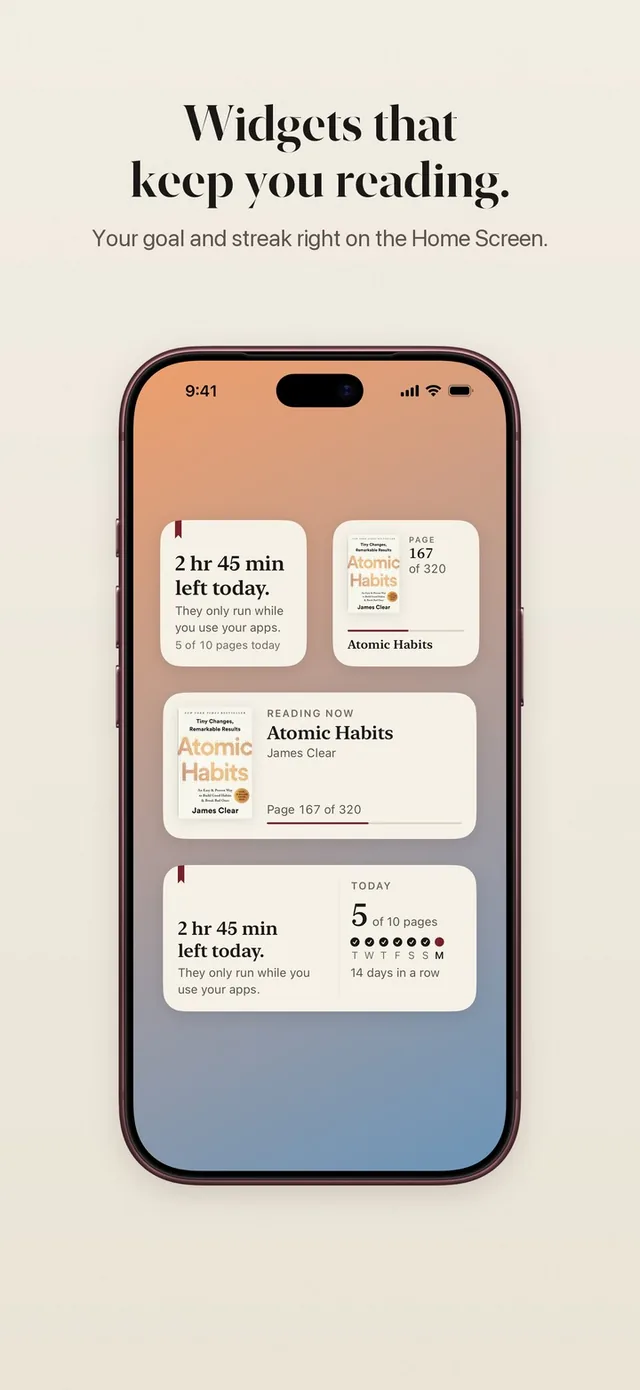
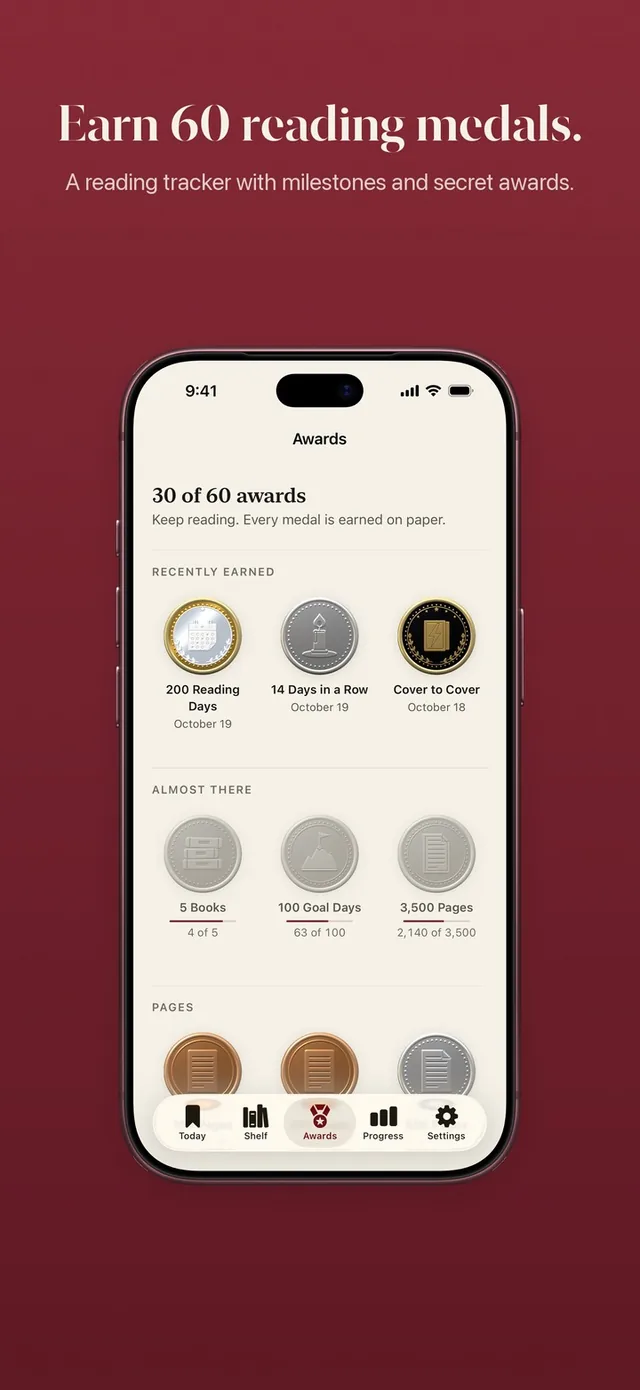
ReadFirst is also an app lock. The apps you choose stay locked through Apple Screen Time until you read, so your streak gets a page every time you reach for your feed. Skips, which open your apps briefly in an emergency, never count as a reading day, so your streak only grows when you actually read. Along the way it earns reading medals at 3, 7, 14, 30, 60, 100, 180, 365 and 500 days in a row.
Try this tonight
Start your streak tonight with this short plan.
- Choose your minimum: one page.
- Choose your time: the moment you usually pick up your phone in the evening.
- Read your page, then mark day 1 somewhere you will see it.
- Set a reminder for tomorrow at the same time.
- Decide now what you will do on a bad day: one page, then sleep.
A reading streak is not about the number. It is about becoming someone who opens a book every day, and the number is just the proof.
Frequently asked questions
What is a reading streak?
A reading streak is the number of days in a row on which you have read. Most streaks count a day after a small amount of reading, such as one page, and the day changes at midnight.
How much do I need to read to keep a streak?
Usually very little. In ReadFirst one page of a printed book counts for the day, so a tired evening can still keep your streak.
What is a grace day in a reading streak?
A grace day lets you miss one day without losing your streak. ReadFirst gives every reader one grace day per calendar month, and it cannot be bought.
What should I do if I lose my reading streak?
Read one page today and start again. Your longest streak stays in your stats, and one missed day does not undo the habit you have built.
Do streaks really help you read more?
For many people, yes: a visible count turns daily reading into something worth protecting. It works best with a small daily minimum and some forgiveness for bad days.