You used to read. Maybe as a kid you finished books under the covers, or in your twenties you always had one in your bag. Then work, kids, a new phone, a few busy years, and now a half-read novel has been on the nightstand since spring. You open it, read the same paragraph three times and reach for your phone instead.
If that sounds familiar, you have not lost the ability to read. You have lost the routine, and a routine can be rebuilt. This guide shows you how to get back into reading as an adult, whether you've been away for years or just hit a reading slump.
Why reading feels hard after a long break
Reading feels hard after a long break because it is a skill of attention, and attention you don't use gets rusty. The first pages back can feel slow and restless. That is normal and it passes, usually faster than people expect.
A few things make the comeback harder than it needs to be:
- The guilt book. The book you abandoned months ago carries a small sense of failure every time you see it.
- Too big a goal. "A book a week" sounds inspiring, but it turns every short evening into a missed target.
- The phone within reach. A feed asks nothing of you. A book asks for a few quiet minutes, and the feed is always one tap closer.
If concentration is the main problem, our guide on why you can't read anymore goes deeper. Here we focus on the practical way back.
Start with two pages
The most reliable way to restart reading is a goal so small you can't argue with it: two pages a day. Two pages take a few minutes. You can read them while the pasta water boils or before you turn off the light.
Two pages works because it removes the negotiation. You don't have to find an hour or feel inspired. And once you are two pages in, you often keep going, because the hard part was opening the book. On the evenings you don't, you still did what you set out to do.
Keep the two-page minimum for at least two weeks, even when you read more. Raise it only when it feels automatic. If you want to see where small numbers lead, our guide to reading 10 pages a day does the math.
Pick an easy book, not an important one
The right book for getting back into reading is one you want to read tonight, not one you think you should have read by now. Short chapters, a strong plot and a voice you enjoy will carry you further than any classic.
Good comeback picks share a few traits:
| Look for | Why it helps |
|---|---|
| Short chapters | Every session ends with a small finish |
| Under about 300 pages | You can see the end from the start |
| A genre you loved before | Familiar pleasure, less effort |
| A gripping plot | You want to know what happens next |
| A recommendation from a friend | Someone to talk to about it |
Thrillers, memoirs, short story collections and well-paced nonfiction are all fine choices. So is the novel everyone in your group chat is talking about. There is no wrong book for a comeback, only a book you dread opening.
And the guilt book? Put it back on the shelf. You can finish it later, or never. Giving yourself permission to quit a book is one of the most useful habits a returning reader can learn.
Reread a favorite
Rereading a book you once loved is one of the fastest ways back into reading. You already know you like it, the language feels familiar and you can relax into the story instead of working to follow it.
It also reminds you why you liked reading in the first place. That feeling, of being pulled into a book and looking up an hour later, is what you are trying to get back. A favorite delivers it with the least effort. Pick the book you would save from a fire and read the first chapter tonight.
Track small wins
Tracking small wins keeps a new reading routine alive, because it turns invisible progress into something you can see. Each day you read is a win. Each finished chapter is a win. Your first finished book in a long time is a big one.
A few simple ways to track:
- Mark each reading day on a paper calendar.
- Keep a short list of books started and finished on the last page of a notebook.
- Note the page you reached each night and watch the number grow.
- Use an app that counts pages, days and books for you.
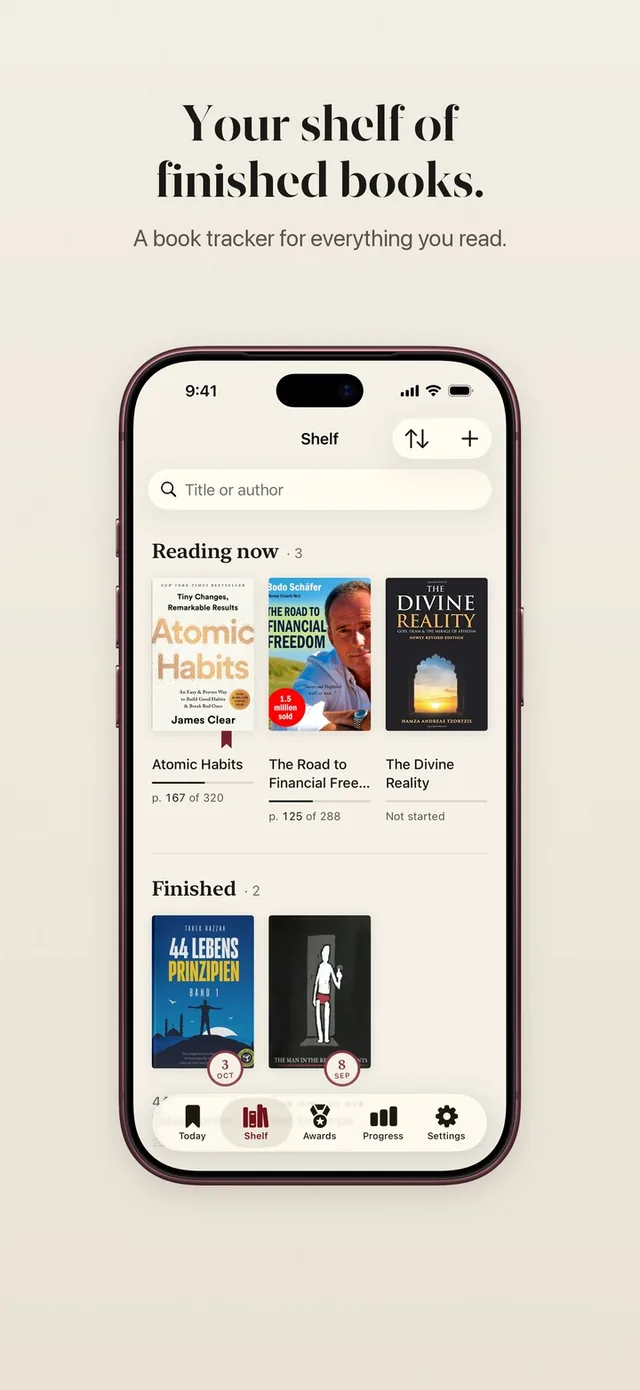
In ReadFirst, you add your book by scanning its barcode, photographing the cover, searching the title or typing it in, and the book tracker shows how far you are. Each page you read with a live page photo counts for your book, your daily goal and your reading streak. Finishing a book gives you a small celebration and a card you can save or share.
There are small surprises along the way too. Among ReadFirst's 60 reading medals is a secret one called Comeback, earned when you read again after a break of seven days or more. It's a nice reminder that coming back counts.
What to do when you stall again
Every returning reader stalls at some point, and a stall is part of the habit, not the end of it. The trick is to make restarting as easy as starting was.
- Drop back to two pages. Whatever your goal had grown to, shrink it for a week.
- Switch books without guilt. A slump often means the book isn't working. Try something lighter.
- Change the place. Read on a park bench, in a café or on the train instead of at home.
- Put friction on the feed. If the phone is where your evenings go, make it ask for a page first. You can do this with Screen Time limits, by deleting an app for a week or with an app lock that opens only after you read.
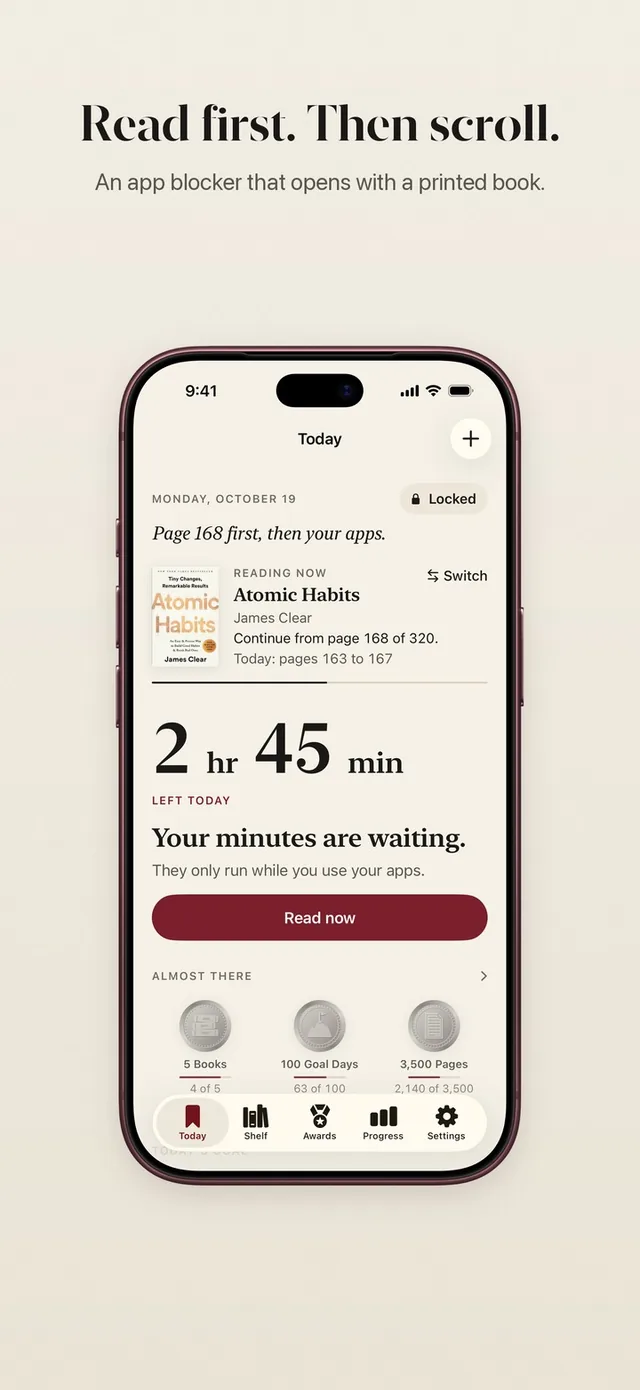
ReadFirst takes the last approach. You pick the apps that pull you in, and they stay locked until you read a page or a few of your printed book and take a live photo of the last one. If you've been away for a few days, it sends a quiet note after 3, 7 and 14 days to invite you back, never more than one a day.
A simple plan: your first two weeks
Here is a two-week plan to get back into reading. It asks for very little and builds something real.
- Tonight: Choose an easy book or an old favorite. Put it on your pillow or next to your usual seat.
- Days 1 to 7: Read two pages a day at the same moment, for example right before bed. Mark each day.
- Day 7: Count your reading days. Five or more is a great week. Fewer is fine too: notice what got in the way.
- Days 8 to 14: Keep the two-page minimum. Move your phone out of reach while you read.
- Day 14: If two pages now feels easy, raise your minimum to five. If you finished a book, pick the next one right away so there is no gap.
After two weeks you'll have a reading streak, a book in progress and the quiet confidence of someone who reads again. That's the whole comeback: one small evening at a time.
Getting back to the reader you were
You don't need a perfect plan to get back into reading, only a small one you repeat. Two pages, an easy book and a way to see your progress are enough. If your phone keeps winning the evening, ReadFirst can make the book come first: a few pages, then your apps, with every page counted toward the reader you are becoming again.
Frequently asked questions
How do I get back into reading after years of not reading?
Start with two pages a day at a fixed time and pick an easy, enjoyable book or a favorite you have read before. Keep the goal small for at least two weeks and count each reading day as a win.
What should I read to get out of a reading slump?
Read something short and gripping, or reread a book you loved. Short chapters, a strong plot and a familiar genre make it easier to build momentum again.
Is it OK to stop reading a book I don't enjoy?
Yes. Quitting a book that doesn't work for you is often the fastest way out of a slump. Pick something you want to read tonight instead.
How many pages a day should I read when getting back into reading?
Two pages a day is a good start because you can manage it even on a busy day. Raise it to five or ten once reading every day feels automatic.
Does ReadFirst have a free version?
No. ReadFirst has no free tier. New subscribers get 3 days free on the yearly plan, which is $39.99 a year on the US App Store as of 20 October 2026.