You start a task, then notice a tab is already open that you do not remember opening. You read a paragraph and your eyes slide back up because none of it stuck. You pick up your phone to check one thing and surface twenty minutes later. If your focus feels shorter than it used to be, you are not imagining it, and you are not stuck with it.
The phrase "short attention span" makes it sound like a fixed trait, something you either have or lack. It is closer to a muscle than a trait. It responds to what you ask of it. This guide explains why attention shortens, then gives you a concrete plan to rebuild it, with short daily reading at the center.
Is your attention span actually broken
Probably not. What usually happens is simpler and more hopeful: your attention has been trained to expect something new every few seconds, so anything slower feels uncomfortable. That discomfort is real, but it is a preference your mind learned, not damage it suffered.
A quick way to check for yourself: can you still get lost in something you genuinely enjoy? A good conversation, a film you chose, a hobby that absorbs you. If the answer is yes, your capacity for deep attention is intact. It has just been pointed at faster and faster inputs, and it has adapted to them the way attention always adapts to what it practices most.
That distinction matters because it changes the fix. If attention were broken, you would need repair. Since it is mostly out of practice, you need training. Training is something you can start today, in small amounts, and feel working within a couple of weeks.
If trouble focusing shows up everywhere in your life, along with low mood, poor sleep or restlessness you cannot shake, that is worth raising with a doctor. This guide is about everyday focus, not a medical assessment.
What shortened it
No single villain is responsible, but a few patterns do most of the work:
- Constant novelty. Feeds and short videos hand you a new thing before the last one finishes. Your mind learns that waiting is unnecessary, because something better is one swipe away.
- Self-interruption. The strongest pull is not the notification you receive, it is the one you go looking for. Reaching for the phone out of boredom teaches your attention to bail the moment a task gets quiet.
- Task-switching. Every jump between tabs, chats and apps leaves a little residue. Your focus never fully lands before it moves again, so it never gets the chance to settle.
- Fatigue and overload. A tired, over-stimulated mind has little left for anything demanding. Late evening, after a full day of screens, is the hardest time to ask for focus.
None of these make you weak or broken. They are the expected result of spending hours in environments built to capture attention. The same adaptability that shortened your focus is exactly what you will use to lengthen it again.
A 4-week plan to rebuild attention
Attention grows the way most things grow: small, steady, slightly uncomfortable practice, repeated daily. This plan asks for about ten to twenty minutes a day and uses reading as the exercise, because a page demands sustained focus in a way almost nothing else does.
| Week | Daily practice | What it trains |
|---|---|---|
| 1 | Read 5 pages, phone in another room | Starting without an exit |
| 2 | Read 10 minutes at the same time each day | Tying focus to a cue |
| 3 | Read 15 minutes, no checking anything mid-session | Staying through the dip |
| 4 | Read 20 minutes, then one task with no tab-switching | Carrying focus into work |
Two rules hold the whole plan together. First, when your mind wanders, notice it and come back to the line you were on, calmly, as many times as it takes. The returning is the exercise, not a sign of failure. Second, if you miss a day, read the next day. One gap changes nothing. Missing twice in a row is the only thing to avoid.
By the end of week four, most people notice the first few sessions felt effortful and the last ones felt almost easy. That shift is the whole point. You are not forcing focus any more; you are rebuilding the habit of it.
Reading as daily attention training
Reading a printed book is unusually good training because it offers no shortcuts. There is no next video, no sidebar, no refresh. The page gives you one thing and asks you to stay with it, which is precisely the skill a short attention span has lost.
Paper helps more than a screen here. A book cannot interrupt you, and nothing on it is one tap from a feed. If staying off the phone during a session is the hard part, the simplest move is to make the phone less available while you read.
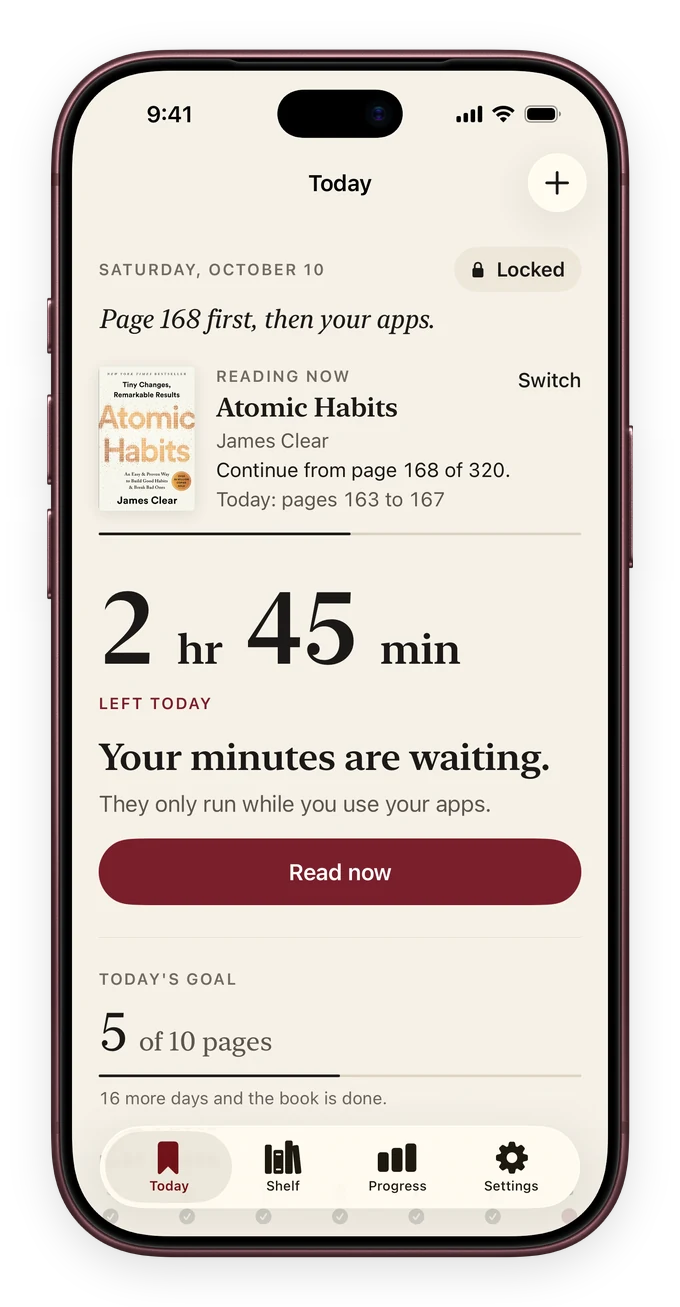
This is where ReadFirst fits the plan without changing it. You lock the apps that pull you with Apple Screen Time, and to open them you read a page of a printed book and photograph it; the page is checked on your device and never saved. A few parts match the four weeks directly:
- The reading timer turns each session into a clear block. You tap once, a clock starts, and it shows on your Lock Screen so you can see the session without opening anything else.
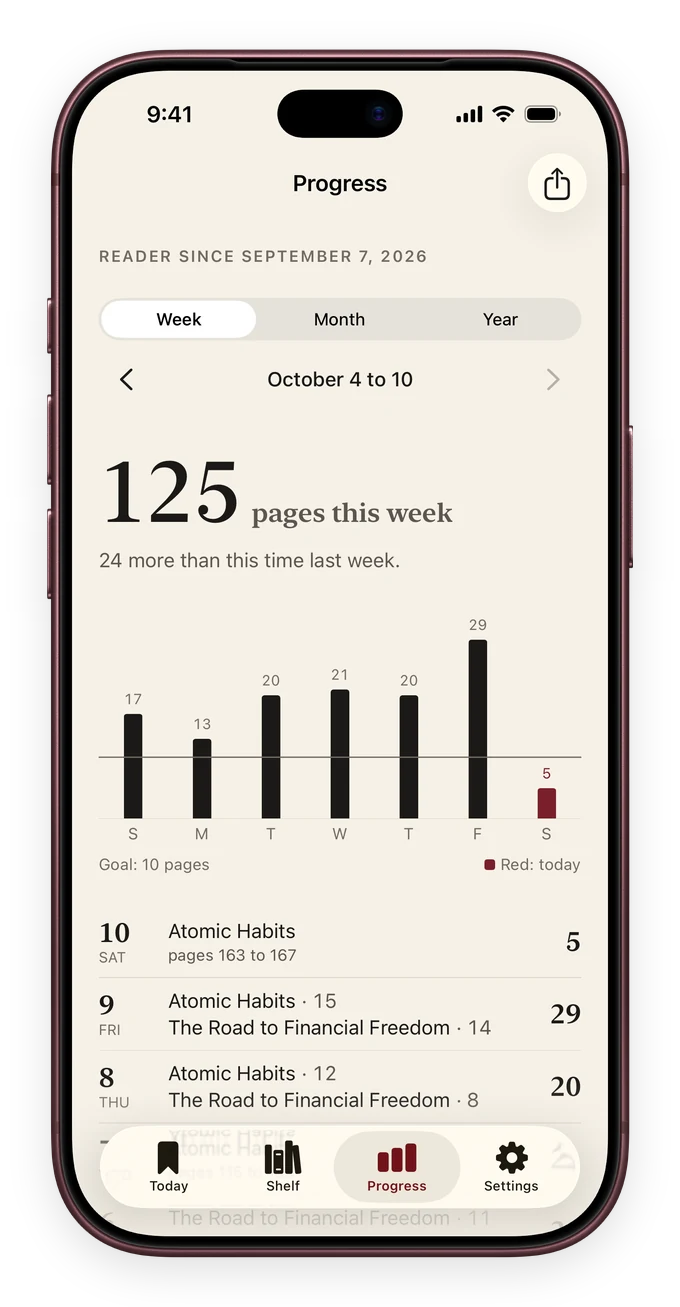
- A daily reading goal keeps the target small and visible. Pick five pages or ten minutes and you always know when you are done.
- A reading streak marks the days you showed up, with one grace day a month so a single miss never erases your progress.
You do not need any app to follow the plan. But if willpower alone has lost this fight before, a lock that asks for one page first can tip the balance.
Signs it is working
Progress with attention is quiet, so it is easy to miss. Watch for these instead of waiting for a dramatic moment:
- You read a page and remember it without rereading.
- You reach the end of a session and want to keep going.
- You reach for your phone, pause, and put it back without opening anything.
- A quiet task no longer feels unbearable within seconds.
- You finish something in one sitting that you would have abandoned a month ago.
None of these arrive all at once. They show up as small, unremarkable moments that add up. To go deeper, our guide on your attention span after TikTok covers the short-video habit, and how to fix brain rot tackles the foggy, scattered feeling that often comes with it.
Frequently asked questions
How long does it take to improve your attention span?
Most people notice a real difference within two to four weeks of short daily practice. Early sessions feel effortful and later ones feel easier. Consistency matters far more than the length of any single session.
Can a short attention span be fixed, or is it permanent?
For everyday cases it is not permanent. Attention adapts to what you practice, so practicing sustained focus a little each day lengthens it again. If focus problems affect every part of your life, it is worth speaking to a doctor.
Why is reading good for attention span?
A printed page asks you to hold your mind on one thing with no shortcuts, no next video and nothing to swipe to. That is exactly the skill a short attention span has lost, so a few minutes of reading a day trains it directly.
Does it matter if I read on paper or a screen?
Paper is usually easier because a book cannot interrupt you and nothing on it is one tap from a feed. On a phone, other apps and notifications are always within reach, which works against the focus you are trying to rebuild.
What if my mind keeps wandering while I read?
That is normal, especially at first. Notice the wandering, return to the line you were on, and treat each return as the exercise rather than a failure. The wandering shrinks as the habit grows. If it helps, read for a set number of minutes rather than pages. If focus is a lifelong struggle for you, our guide on reading with ADHD has approaches made for a mind that wanders by default.