If you have ADHD, reading can feel like a fight you keep losing: you read a page, realize none of it landed, and your hand is already on the phone. The usual advice, "just focus", is useless, because focus on demand is exactly the hard part.
Reading with ADHD gets much easier when you stop relying on willpower and start shaping the setup around how your attention actually works. The tips below are practical, not medical. If reading trouble is part of a bigger struggle with focus, sleep or mood, a doctor or specialist is the right place for a diagnosis and real support. This guide is about everyday reading habits, not treatment.
Match the fix to the friction
Reading with ADHD rarely fails for one big reason. It fails at four small, specific moments, and each one has a setup fix. Find the moment that trips you up most and start there.
| The friction | What it feels like | ADHD-friendly fix |
|---|---|---|
| Slow start | You know you should read but cannot make yourself open the book | Shrink the goal to two pages or five minutes, so starting is almost free |
| Open-ended session | "Read" has no finish line, so your brain never fully commits | Set a timer with a clear end and read only until it rings |
| Phone pull | Every few seconds without something new, your hand drifts to the feed | Put the phone in another room and keep the book nearer than the screen |
| Perfectionist streak | One missed day feels like failure, so you quit the whole habit | Aim for "most days" and allow yourself a miss without starting over |
The rest of this guide expands the fixes that need more than one line.
Make sessions short on purpose
A long reading goal is intimidating, and intimidating things get avoided. Flip it. Aim for a tiny session you cannot fail: two pages, or five minutes. Starting is most of the battle, and if you want to keep going when you hit the target, the win is already yours.
Here is a concrete five-minute routine that works for a lot of ADHD readers:
- Put the phone in another room, or at least across the table, before you sit down.
- Open the book to a bookmarked page, so there is no "where was I" friction.
- Set a timer for five minutes and press start before you read a single word.
- Read until it rings. If your mind wanders, finish the current sentence, then carry on.
- When it rings, stop, even if you want to continue, and mark your page.
That last step sounds odd, but stopping on a small win leaves you wanting more tomorrow instead of burned out tonight. Do this once a day for a week and the five minutes often stretch on their own. If focus has felt especially fried lately, our guide on how to fix brain rot covers rebuilding slow attention step by step.
Pick books that grab you fast
You do not owe any book your patience. With ADHD, a slow start is often a dealbreaker, so choose books that hook you quickly:
- Thrillers, mysteries and fast plots.
- Short chapters, so there is always a near finish line.
- Memoirs and stories in a voice you enjoy.
- Books a friend could not put down.
Quit anything that bores you by page 50 without guilt. The right book does half the focusing for you, and a short chapter gives your attention a natural place to breathe and decide to keep going.
Audiobooks vs print with ADHD
This question comes up a lot, so it deserves more than a line. Audiobooks can be a genuine help for ADHD readers: you can walk, do dishes or pace while you listen, and movement often makes focus easier rather than harder. For a book you kept bouncing off on the page, hearing it read can be the thing that finally lets you in.
The catch is that audio also drifts easily. With nothing to anchor your eyes, it is common to realize five minutes have passed and you took in none of it, then rewind again and again. Many people land on a mix: audio for commutes, chores and walks, print for the evening wind-down when a screen would only pull you away.
Print has one quiet advantage worth keeping. A printed book has no feed, no notifications and no other app one swipe away, so it competes with nothing for your attention. That is also why ReadFirst is built around printed books specifically, not audio or e-readers.
Quiet the phone, for real
The phone is the single biggest competitor for an ADHD reader, because it offers exactly the fast, novel input your brain is pulled toward. Resisting it in the moment rarely works, so remove the choice instead:
- Put the phone in another room, not face down beside you.
- Turn off non-human notifications.
- Log out of one app while you read.
- Keep a printed book in reach, so the better option is also the nearer one.
If you want the long version of why the feed feels so magnetic, our guide on why you can't read anymore walks through the attention habit and how to retrain it.
Build a streak you are allowed to break
Perfect streaks are a trap, because one missed day can feel like total failure and end the whole habit. Reframe the goal from "never miss" to "never miss twice", so a single off day stops being the end of anything. A run that survives a bad day is far more durable than one that demands perfection.
Here is the reframe that helps most ADHD readers. Instead of fighting the pull toward your phone, use it. Let the moment you reach for a feed be the moment you read a couple of pages first.
How ReadFirst can help
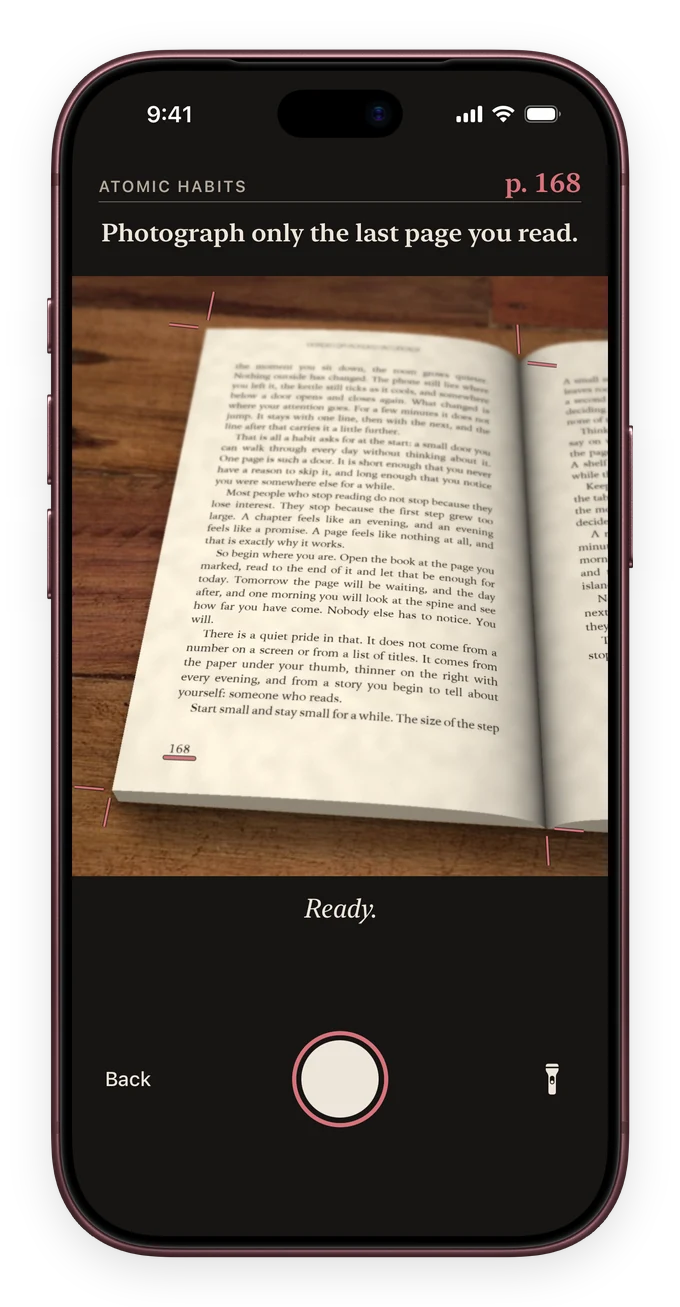
ReadFirst is not a treatment for ADHD, and it does not claim to be. It is a setup that makes reading the easy first step. You choose the apps to lock with Apple Screen Time, and to open them you read a page of a printed book and take a live photo of it. The page is checked on your device and never saved, and there is no account to set up.
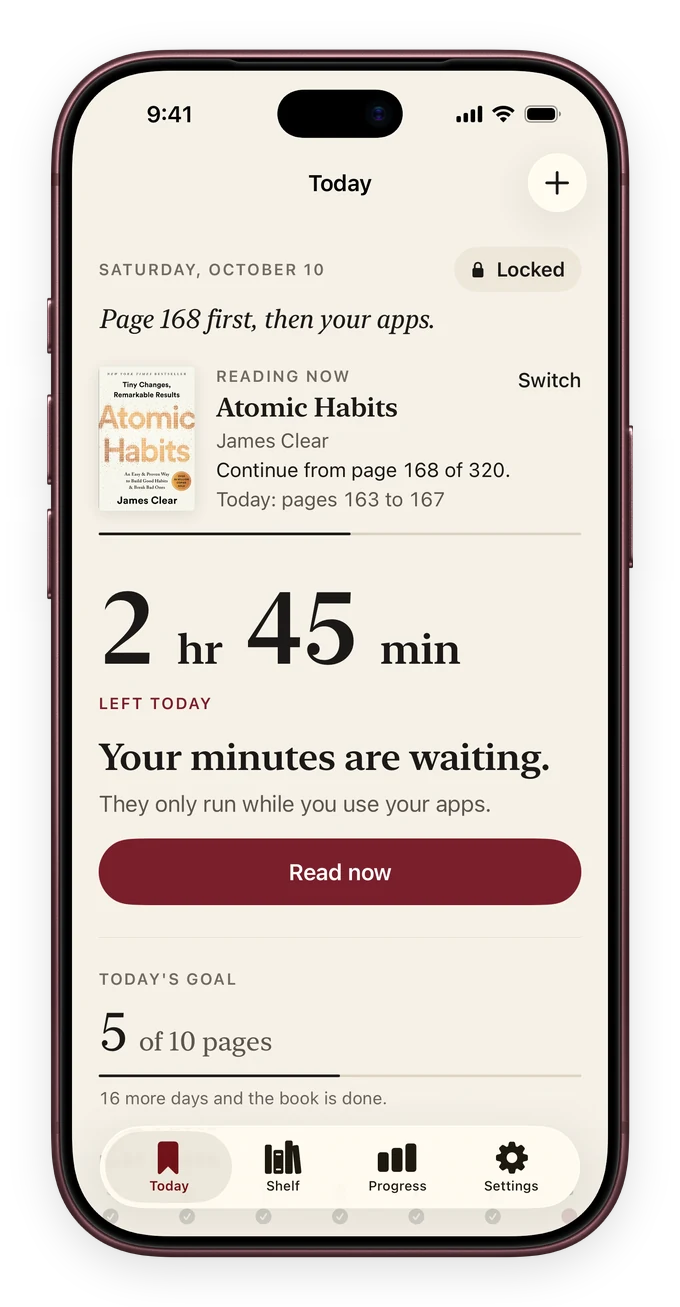
- A reading timer with a clear end. Tap Read now and the reading timer runs on your Lock Screen, so the session has edges and the clock pauses if you leave to use another app.
- Tiny goals you can hit. Set your rule as gently as one page, so starting is never daunting, and extra pages fill a read-ahead bank for the days you have momentum.
- A reading streak that forgives. One grace day a month means a single off day does not end your run.
For practice aimed squarely at focus, see our guide on your attention span after TikTok.
Frequently asked questions
Why is reading so hard with ADHD?
Reading asks for sustained attention on one slow thing, which is exactly what ADHD makes difficult, especially next to a phone that offers fast, novel input. Shorter sessions, a clear timer and a quieter setup help more than willpower.
How long should an ADHD reading session be?
Start very short, two pages or five minutes, so it is easy to begin. You can always keep going, but a tiny, repeatable session beats a long one you dread. Stopping on a small win makes it easier to return the next day.
Do audiobooks count for ADHD readers?
They can be a great tool, especially when you can move while you listen, though some people find their mind wanders and they rewind a lot. Many people mix audio for chores and walks with print for the evening. ReadFirst itself is built for printed books.
Can an app really help me read with ADHD?
An app cannot replace focus, but it can shape your setup: short sessions, a timer with a clear end, small goals and a phone that is harder to reach. ReadFirst puts a page before the feed to make reading the first step.
Is this a substitute for ADHD treatment?
No. These are everyday reading habits, not medical advice. If trouble concentrating affects many parts of your life, or comes with sleep problems or low mood, talk to a doctor or specialist about diagnosis and support.