You decide on a Sunday night: no more Instagram, no more TikTok, no more endless scrolling. For a day or two it feels clean. Then a dull moment arrives, your thumb finds the empty spot on the Home Screen out of habit, and by Wednesday you are back where you started.
A social media detox fails for a plain reason, and it is not weak willpower. You removed something your day leaned on and put nothing in its place. This guide shows how to run a detox that survives past day three: a realistic scope, a built-in replacement, and apps that are harder to open.
Why most detoxes fail by day three
The first two days run on novelty and resolve. You are motivated, the decision is fresh, and saying no feels good. That fuel runs out fast. By the third day the apps are just as tempting and the glow of the plan is gone, so every open is a fresh fight you have to win again.
Three things usually break a detox at that point:
- The empty gap. Scrolling filled hundreds of small moments: the line, the elevator, the first minute in bed. Remove the app and those moments turn empty, and your brain reaches for the quickest fill it knows.
- One tap away. The app still sits on your phone, one tap from any screen. You are relying on catching yourself dozens of times a day.
- All or nothing. "Never again" has no room for a slip. The first time you open an app the whole plan feels broken, so you quit the plan instead of continuing it.
A detox that lasts expects the empty gap and plans for it, and it stops leaning on a decision you have to win over and over.
Pick a realistic scope
"Delete all social media forever" sounds strong and almost never holds. A scope you can actually keep beats a dramatic one you abandon by the weekend. Decide three things before you start.
Which apps. You probably do not need to quit everything. Pick the two or three that eat the most time and give the least back, the ones you open without deciding to. Leave the messaging app you use to reach real people.
How long. A week is a good first run, long enough to feel the difference and short enough that the end is in sight when a hard moment comes. For a ready-made structure, our 7-day digital detox challenge lays one out day by day.
What still counts as success. Decide in advance that a slip is not a failure. If you open an app once, note it and keep going. Ten clean days and two slips is a clear win, not a broken streak.
Write the scope down somewhere you will see it. A detox you defined is easier to keep than a vague intention to "be on my phone less".
The replacement-habit method
This is the part most detoxes skip, and it is the part that decides whether yours lasts. You cannot subtract a habit and leave a hole. The hole fills itself, usually with the very thing you were trying to drop. You have to put something in the gap on purpose.
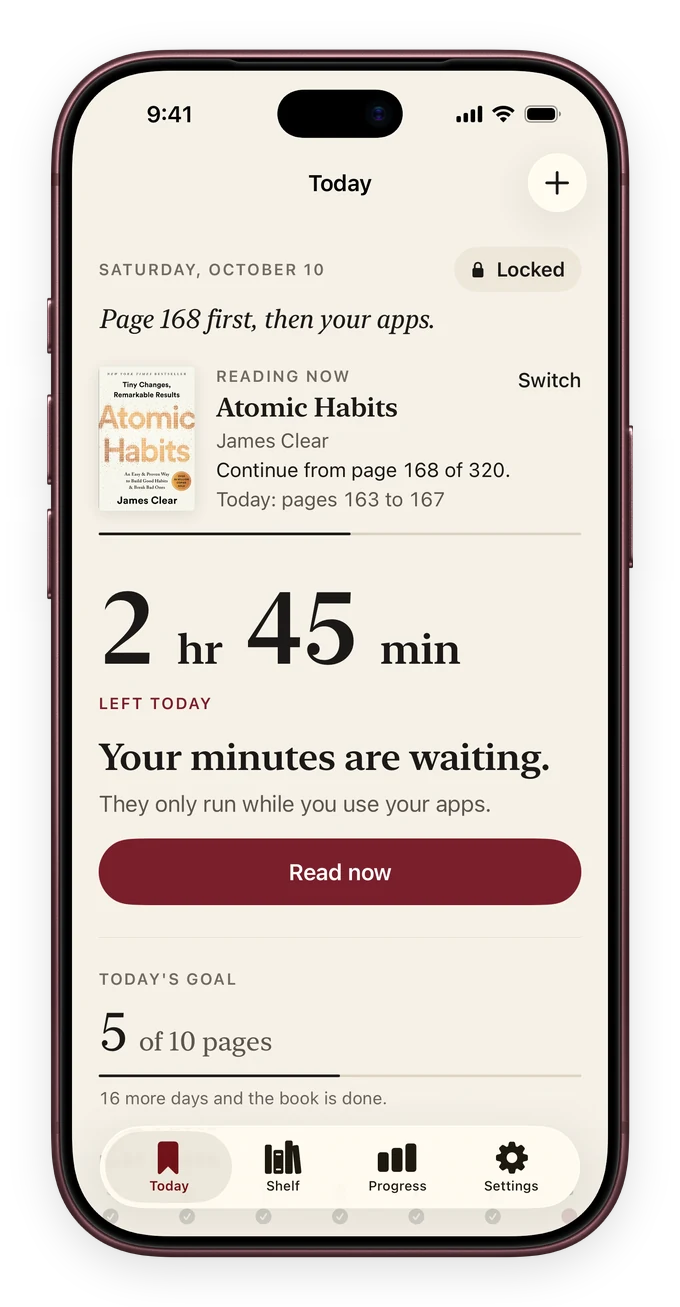
Reading is the best replacement for scrolling, and not by accident. It fits the same moments, the couch, the bed, the wait. It uses the same attention you were spending on the feed, and it pays that attention back with something scrolling rarely gives: the settled feeling of having followed one thing for a while. For how that trade plays out moment to moment, see what to do instead of scrolling.
The method is simple:
- Choose the replacement before the detox starts. A printed book you actually want to read, waiting where you usually scroll.
- Pair it with the old trigger. When your hand reaches for the phone out of habit, that reach becomes the cue to open the book instead.
- Keep it tiny. One page in a dull moment is enough. You are not replacing an hour of scrolling with an hour of reading. You are giving the reflex somewhere else to go.
A detox framed as "stop scrolling" is a week of saying no. One framed as "read instead of scroll" is a week of saying yes to something, and it lasts because it is additive, not just a loss. For why swapping the reward beats fighting the urge, a dopamine detox that works covers it.
Lock the apps, not your willpower
Scope and a replacement get you a long way. The last piece is removing the hourly decision, because willpower is the part that runs out. If opening an app takes one tap, you will lose a few of those decisions, and a few is enough to unravel the week. The fix is to make opening the app cost a small, deliberate action, so the easy path and the good path are the same.
| Approach | What you lean on | Why it fades or holds |
|---|---|---|
| Just decide to stop | Willpower, every single time | Fades by day three when novelty runs out |
| Delete the apps | Reinstall friction | Holds until one weak moment and a 20-second reinstall |
| A simple screen-time limit | A tap on "ignore limit" | Fades fast once ignoring becomes routine |
| Lock behind a page you read | A small action, not a decision | Holds, because the action also builds the replacement |
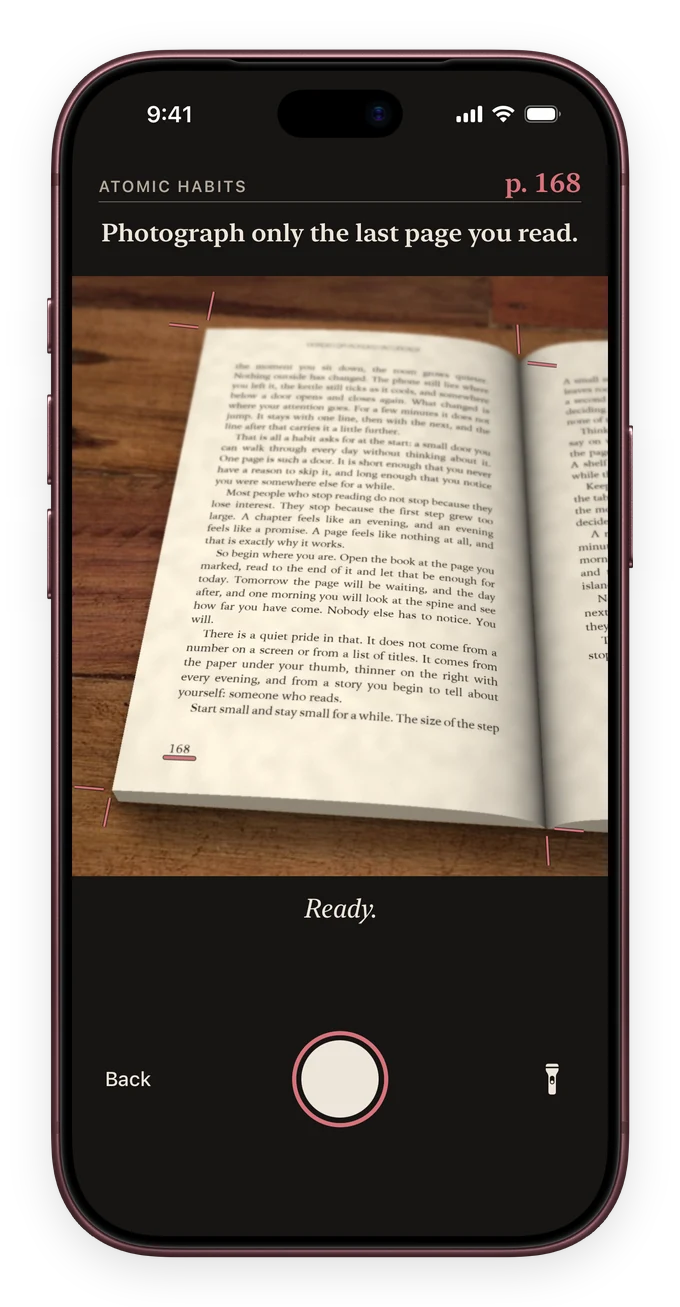
That last row is how ReadFirst works. You pick the apps to lock with Apple Screen Time, and to open one you read a page of a printed book and take a live photo of it. The page is checked on your device and never saved. Your reading rule decides how many minutes a page is worth, so the cost is yours to set. The detox stops depending on you catching yourself and starts depending on a door that asks for a page.
The quiet trick is that the lock and the replacement are the same move. The thing standing between you and the feed is a page of your book, so every time the old urge shows up, it hands you the new habit.
What to do instead
A week with less scrolling has real hours in it that used to disappear. Decide ahead of time where they go, so the gap does not fill itself:
- Keep the book visible. Nightstand, couch arm, bag, wherever your thumb used to reach. Out of sight loses to out of reach.
- Read before the first feed of the day. A few pages before you open anything sets the tone and often takes the edge off the urge.
- Let dull moments stay dull. Not every empty minute needs filling. Part of the detox's value is remembering that boredom passes on its own.
- Count the small wins. A day you read and did not scroll is worth noticing. Early progress that feels real carries a habit past the week.
By the end of a week, most people notice two things: the apps mattered less than they expected, and the replacement mattered more. That is the detox working as it should, not a week of going without, but a quiet swap you might just keep.
Frequently asked questions
How long should a social media detox last?
Start with about a week. It is long enough to feel the change and short enough that the finish line stays in view when a hard moment arrives. You can extend it once the first run feels easy, but a week you complete beats a month you abandon.
What is the main reason social media detoxes fail?
They leave an empty gap and rely on willpower to defend it. Scrolling filled hundreds of small moments, and removing the app without a replacement means your brain reaches for the quickest fill it knows. Pairing the detox with a concrete replacement habit, like reading, is what makes it hold.
Do I have to quit every app at once?
No, and it usually works better not to. Pick the two or three apps that take the most time and give the least back, and keep the ones you genuinely need to reach real people. A narrow scope you can keep beats a total ban you drop by the weekend.
What should I do instead of scrolling during a detox?
Read a printed book. It fits the same moments scrolling filled, uses the same attention, and gives a calmer payoff. Keep the book where your thumb used to reach for the phone, so the old reflex has somewhere else to go.
Can an app blocker really help a detox stick?
Yes, when it removes the hourly decision rather than adding one more thing to resist. ReadFirst locks your chosen apps behind a page of a printed book, so opening the feed costs a small deliberate action that also builds your replacement habit. You can track it with a reading streak that forgives one missed day a month.